
User Management
Chinese source: 柜员管理
Locale: en-US
Audience: Internal learning
Business Frame
User management explains the operations user's day-time lifecycle: user status, sign-on state, forced sign-off, user events, user information, transaction records, reconciliation, and role permissions.
In English learning pages, 柜员 is translated as operations user by default. Use teller only when the branch teller context is important.
flowchart LR
  A["User exists and has role"] --> B["User signs on"]
  B --> C["Processes transactions"]
  C --> D["Transaction records are created"]
  D --> E["Records are reviewed / reconciled"]
  E --> F["User balances and signs off"]
Transaction List
| Code | English Name | Page Type | Study Focus |
|---|---|---|---|
[9103] | Forced User Sign-off | Operations control | Ending an abnormal user session. |
[9301] | User Event Inquiry | Event inquiry | Review sign-on, sign-off, and user events. |
[9302] | User Information Inquiry | User inquiry | Check user status, institution, role, and login state. |
[9303] | User Transaction Record Inquiry | Transaction record inquiry | Trace user transactions by code, amount, reference, and status. |
[9104] | User Transaction Reconciliation | Operations review | Mark transaction records as reviewed or reconciled. |
[9311] | Role Permission Information Inquiry | Permission inquiry | Check role-level operating and authorization permissions. |
[9103] Forced User Sign-off

Forced sign-off is used when a user cannot complete normal sign-off because of abnormal session state, system issue, or operational handling. It should be controlled because it changes the user's operating state and can affect closeout.
Risk controls: confirm the user, institution, current sign-on state, unfinished transaction records, and whether the user has completed required balancing or reconciliation.
[9301] User Event Inquiry
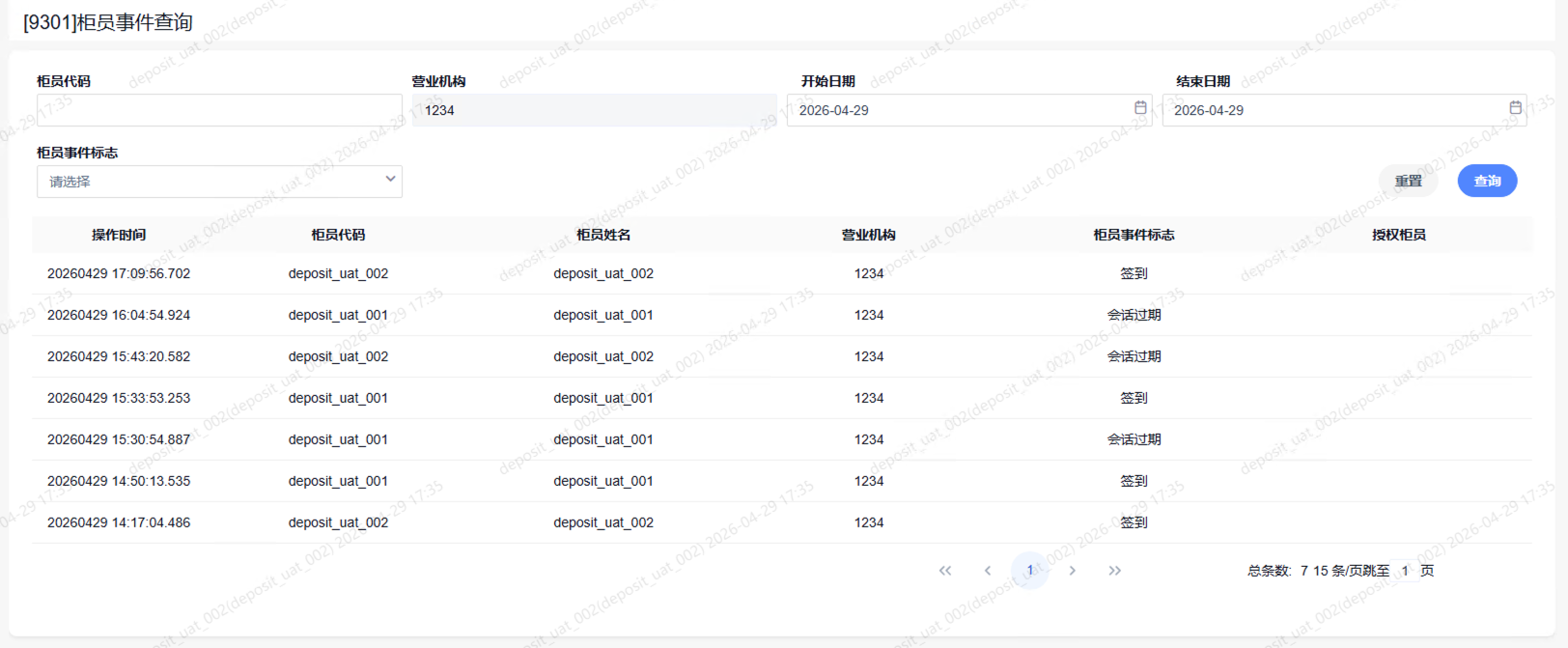
User Event Inquiry helps operations teams review user lifecycle events such as sign-on, sign-off, forced sign-off, and abnormal state changes. It is useful when investigating whether a user was online or active during a transaction window.
Risk controls: event data may expose user behavior and security structure, so access should be permission-controlled and auditable.
[9302] User Information Inquiry
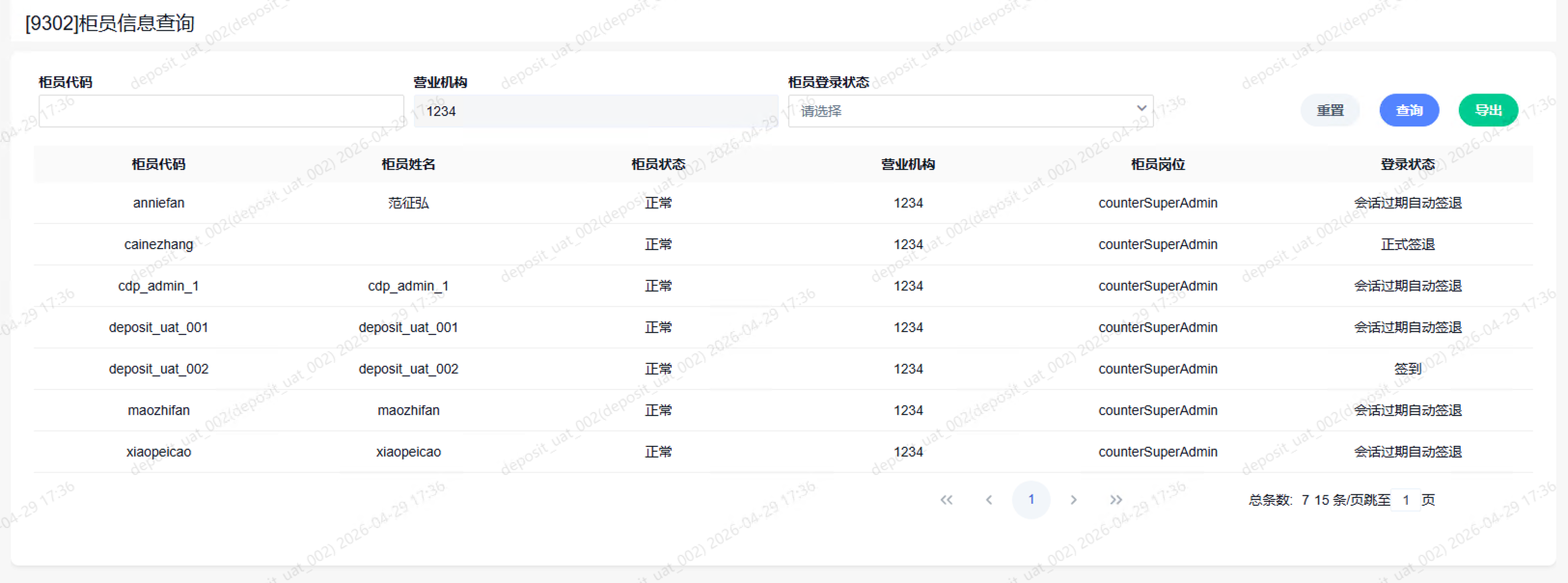
User Information Inquiry is the first page to check when a user cannot process a transaction. It helps determine whether the user exists, is active, belongs to the expected institution, and is in a valid operating state.
Reading focus: user code, institution, role, status, login/sign-on state, and whether the user can currently transact.
[9303] User Transaction Record Inquiry
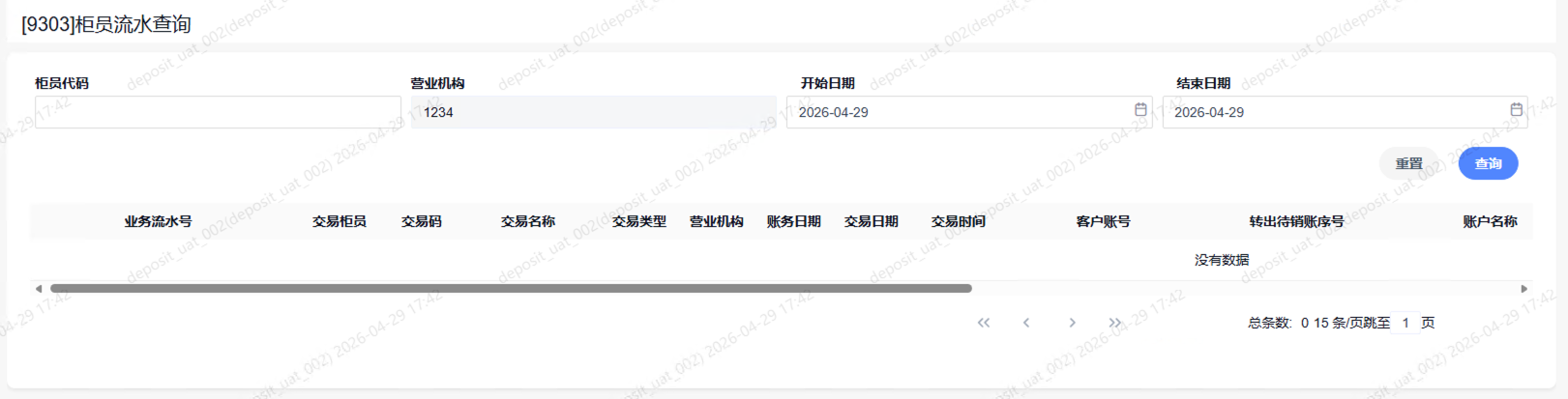
User Transaction Record Inquiry traces transactions from the operator perspective. It answers who processed which transaction code, when, with what amount or reference, and whether authorization or reconciliation is involved.
Use this page together with customer account history, internal account history, and special operation records.
[9104] User Transaction Reconciliation
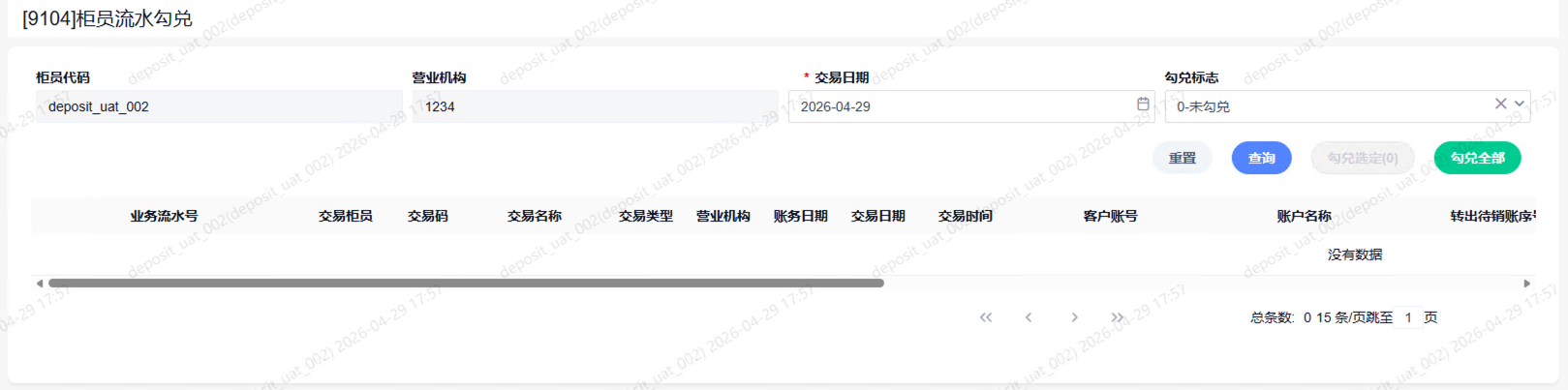
User Transaction Reconciliation is an operations closeout function. It does not normally change customer accounting; it updates review/reconciliation state for transaction records.
Risk controls: batch or reconcile-all actions must be filtered carefully. Large transactions, reversals, fees, suspense items, and authorized transactions need focused review.
[9311] Role Permission Information Inquiry
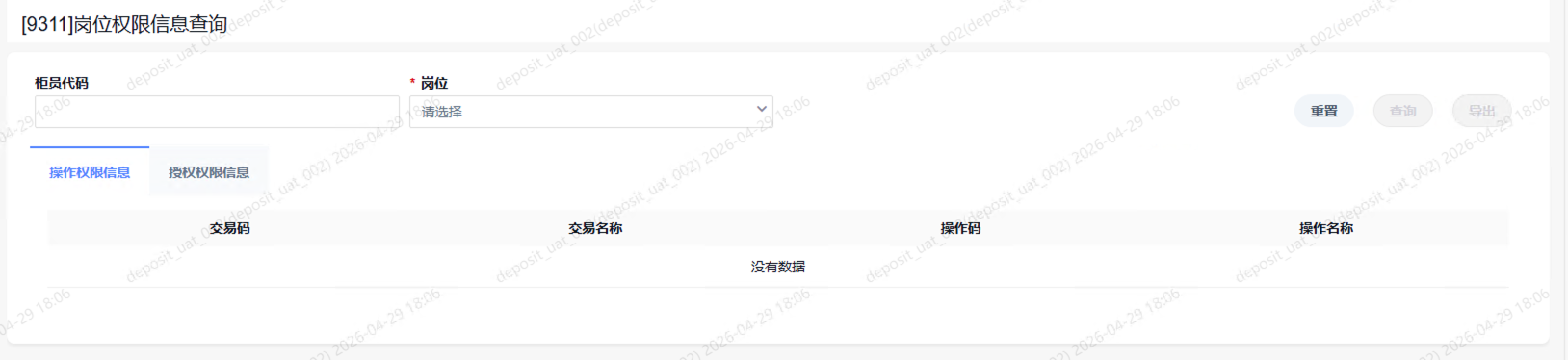
Role Permission Information Inquiry is used to understand whether a role has operating or authorization permissions for transactions. It supports troubleshooting and periodic permission review.
Risk controls: high-privilege roles should be reviewed for excessive operating permissions, excessive authorization permissions, and self-approval risk.
Related Concepts
| Concept | Link |
|---|---|
| User permissions and authorization | User Permissions, Roles, and Authorization |
| Transaction reconciliation | User Transaction Records, Reconciliation, and EOD Review |
| EOD and balancing | Business Date Rollover, EOD, and Balancing |